


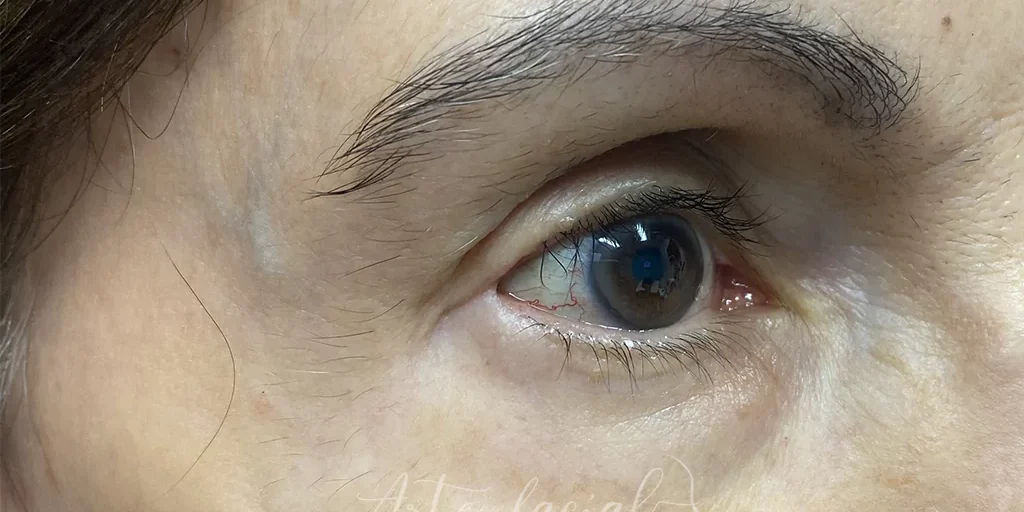
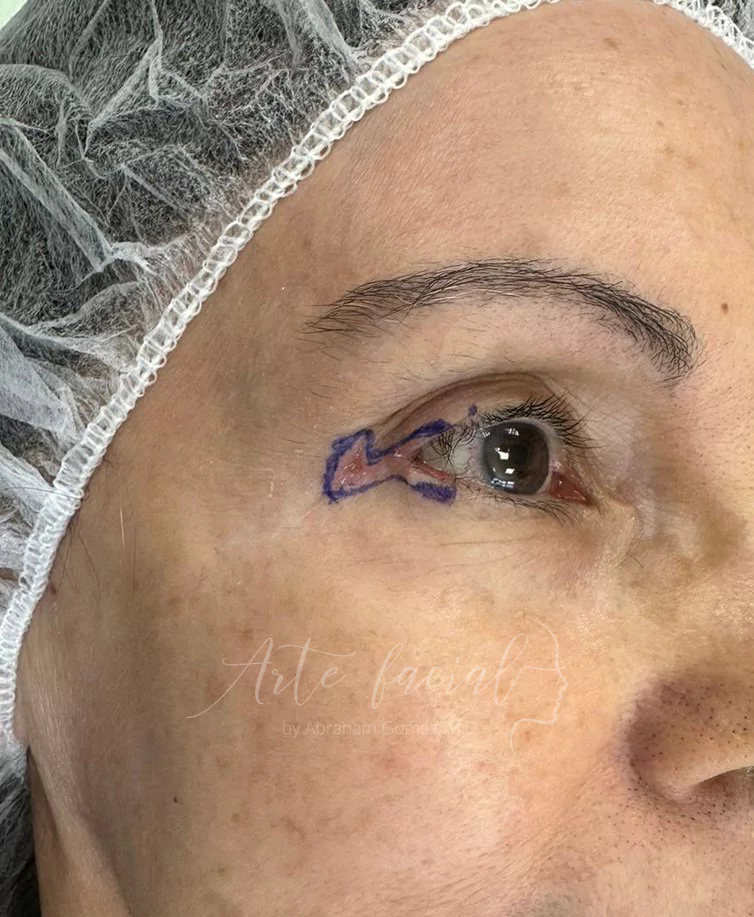
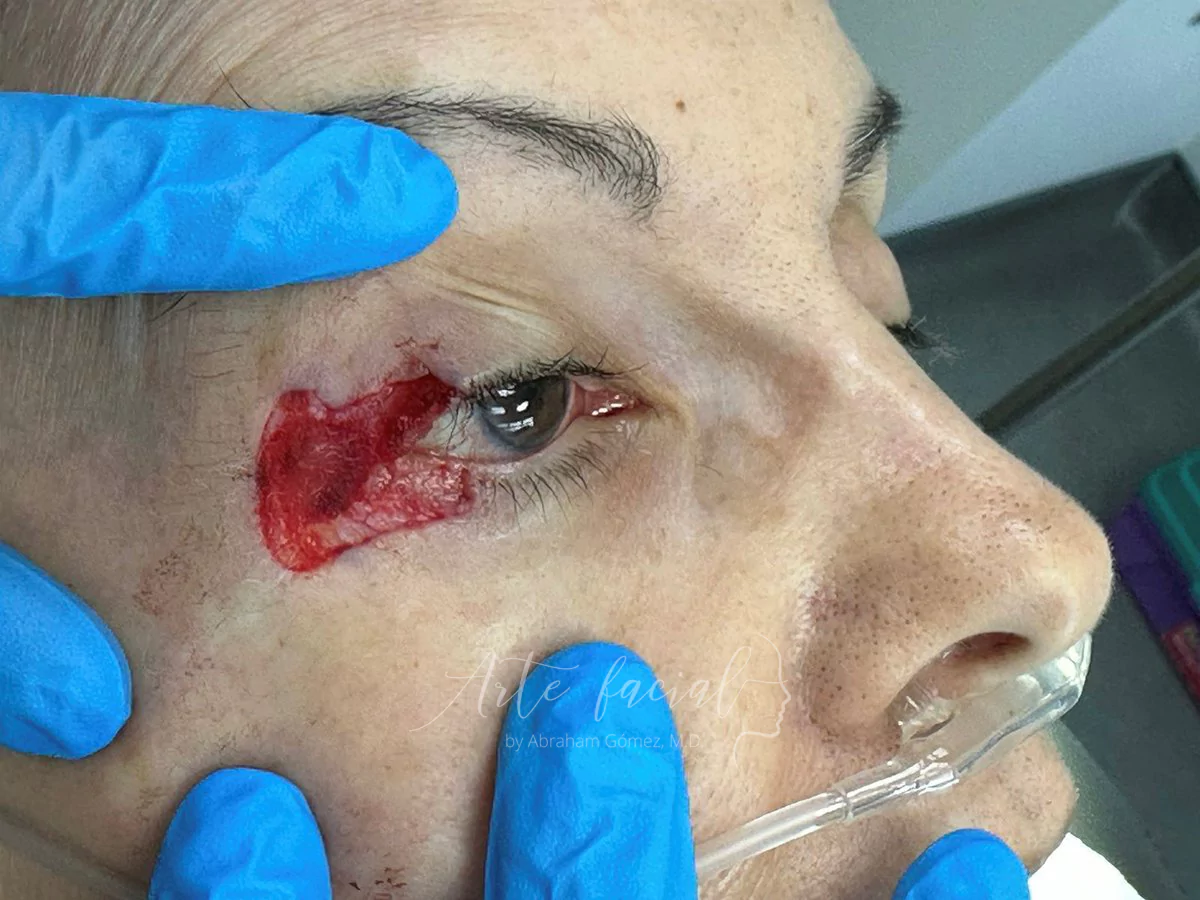
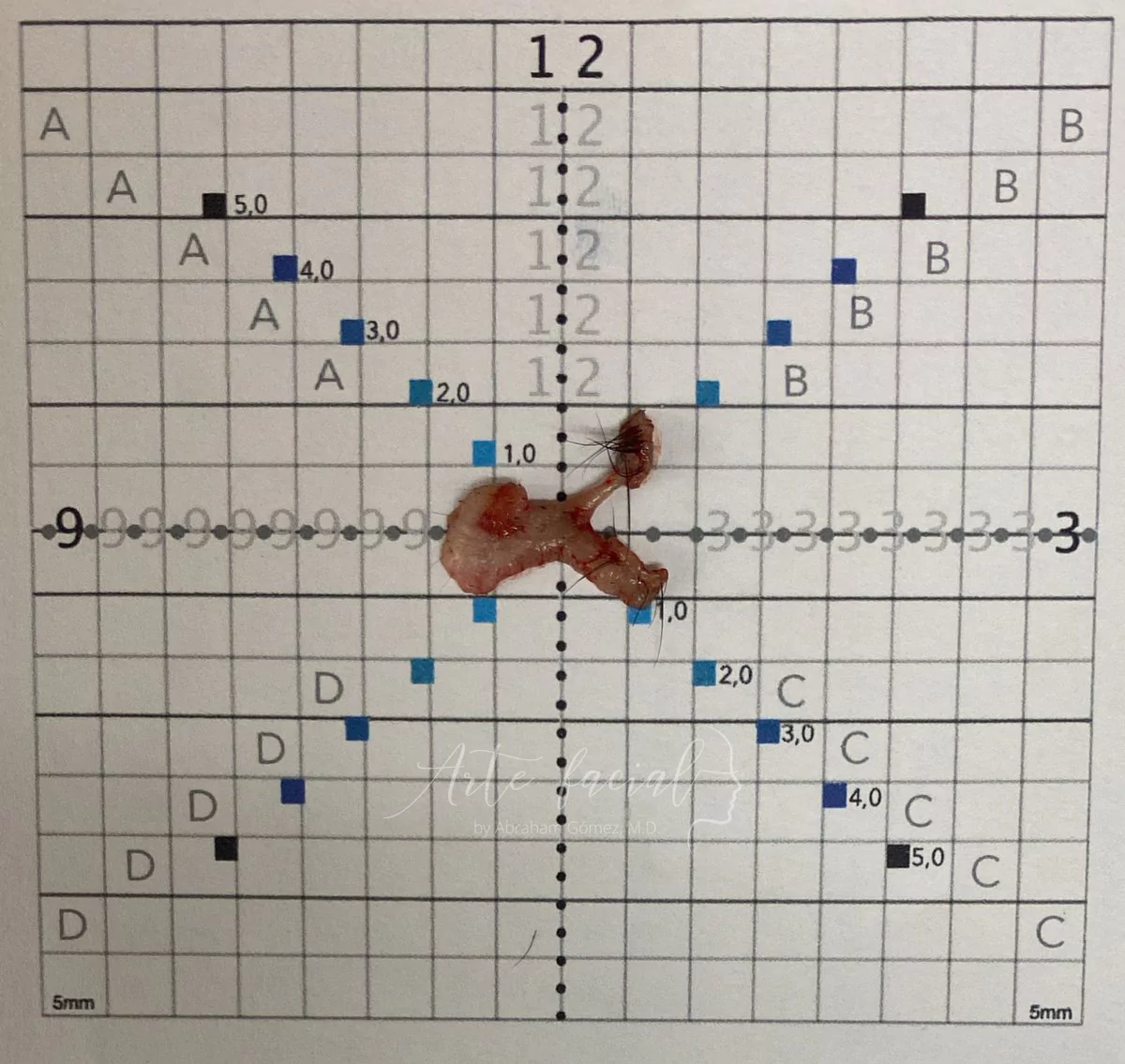
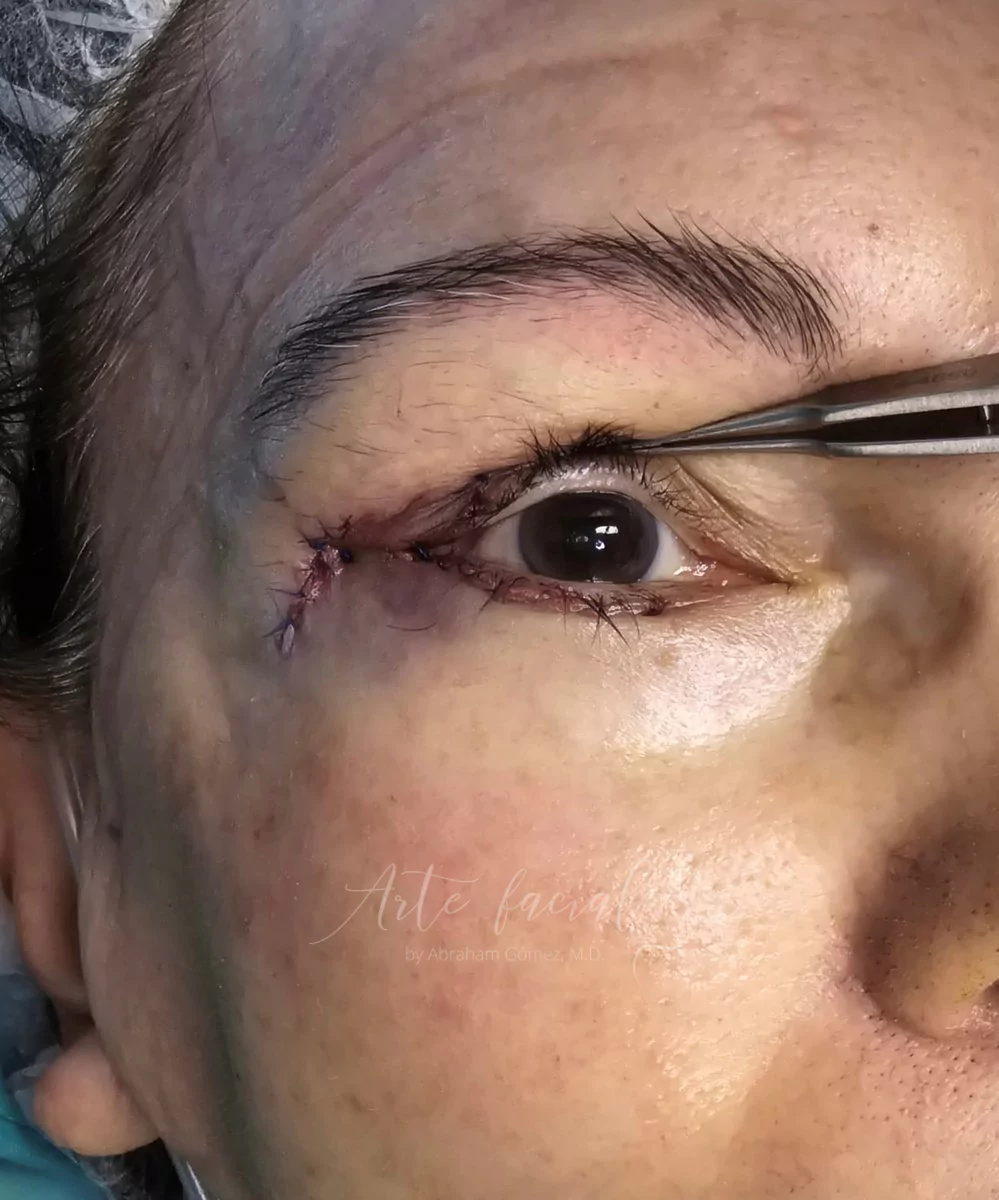
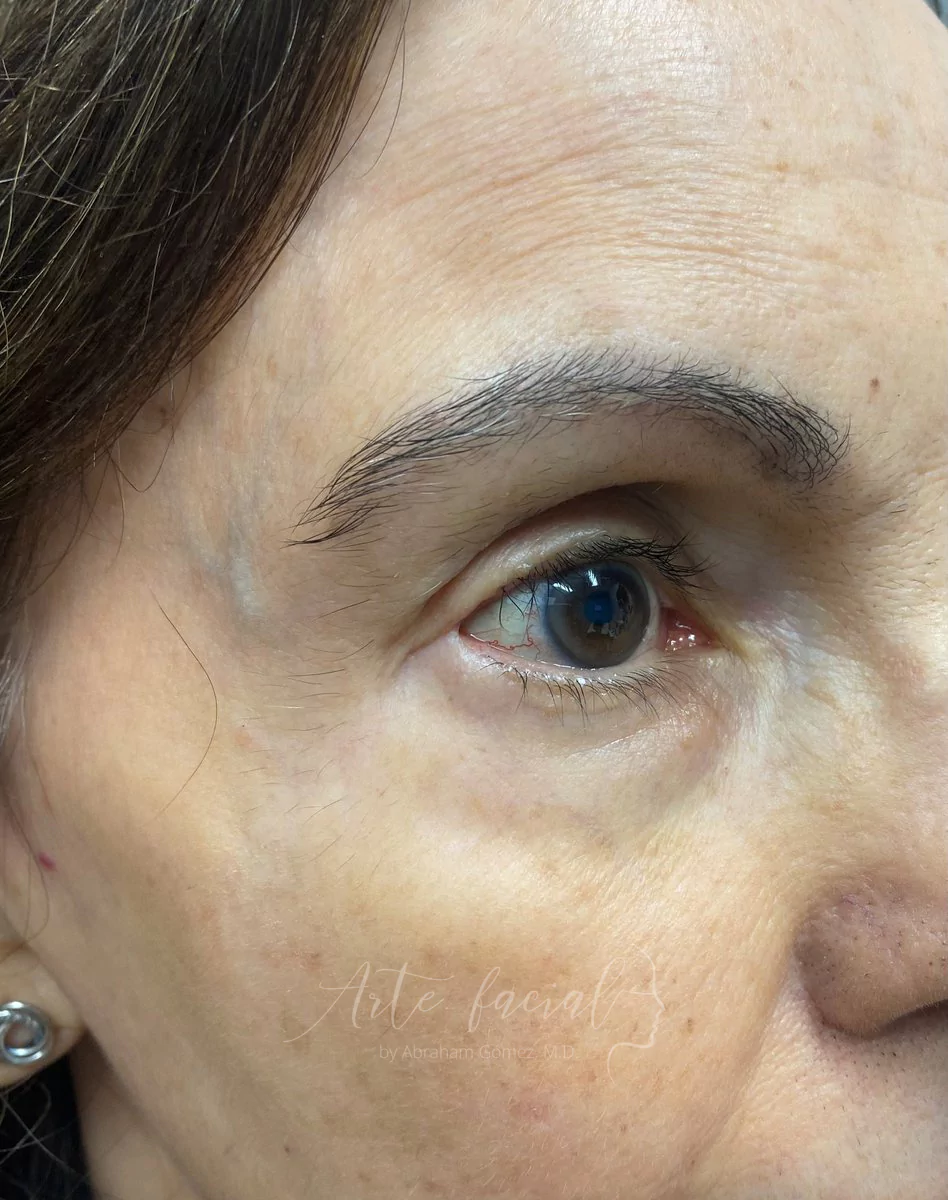
Dermatologists and plastic surgeons have employed Mohs surgery for decades to safely and efficiently remove eyelid skin cancer. The technique confirms complete tumor removal while conserving as much healthy tissue as possible. However, managing eyelid skin cancer does not only consist of electing the best method to remove the lesion but also the most efficient and safe way to reconstruct the eyelid after cancer removal. This is the specialized field of the highly skilled oculoplastic surgeon, whose expertise is critical in achieving the best possible outcomes.
When oculoplastic surgeons face the challenge of reconstructing an eyelid after skin cancer removal, they must rely on state-of-the-art techniques and surgical experience to achieve the best possible functional and cosmetic results.
The treatment of eyelid skin cancer adheres to three key principles. The priority is to remove the entire lesion without leaving cancer cells behind. The Mohs technique, with its meticulous layer-by-layer approach and immediate on-site examination of tissue, was specifically designed to ensure this first point, highlighting its effectiveness in complete lesion removal.
Second, the oculoplastic surgeon reconstructs the eyelid defect to maintain normal eyelid function. This requires complex reconstructive procedures using flaps and grafts in many cases. The goal is to achieve full eyelid closure and adequate corneal protection.
Third, and undeniably so, achieving good cosmesis after surgery is crucial. It’s not just about removing the cancer and restoring function but also about assuring the patient is content with their appearance. Preventing scarring, deformity, and retraction depends on meticulous surgical technique and surgeon experience. Patients appreciate maintaining good eyelid symmetry and a natural eyelid shape and contour, especially after the emotional and physical toll they have undergone.

+506 7032-5570
Abraham Gómez, MD
Hospital Clínica Bíblica, Omega Building, 2nd floor
Loras Medical, Torre Las Loras, main floor
+506 7032-5570
Abraham Gómez, MD
Hospital Clínica Bíblica, Omega Building, 2nd floor
Loras Medical, Torre Las Loras, main floor
ARTE FACIAL
ARTE FACIAL

Visit us at our new office! 25% off on your consultation at Loras Medical. Book here (Valid Until December 15, 2023.)
Please fill out the form below to schedule a virtual consultation with Dr. Gomez.
 |
|