



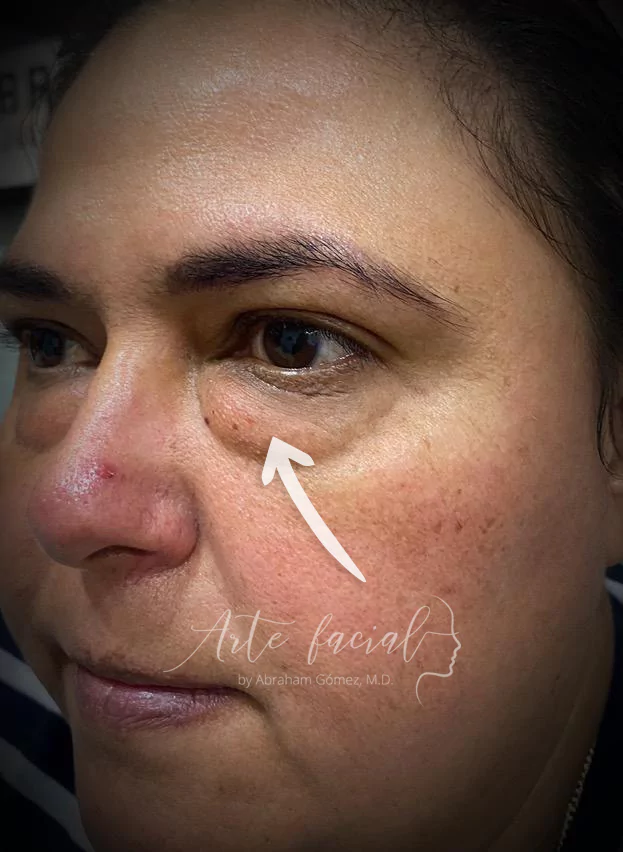
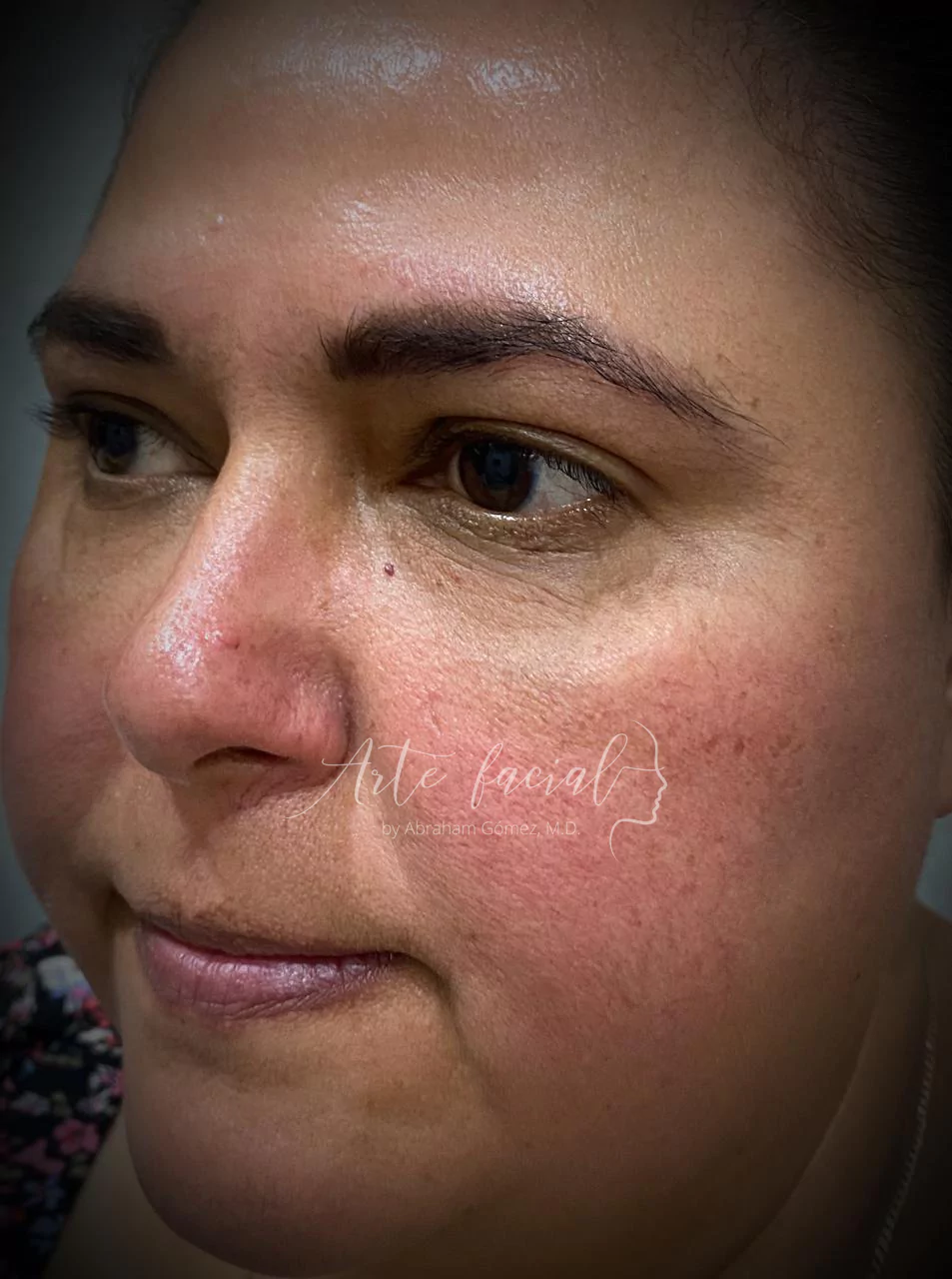
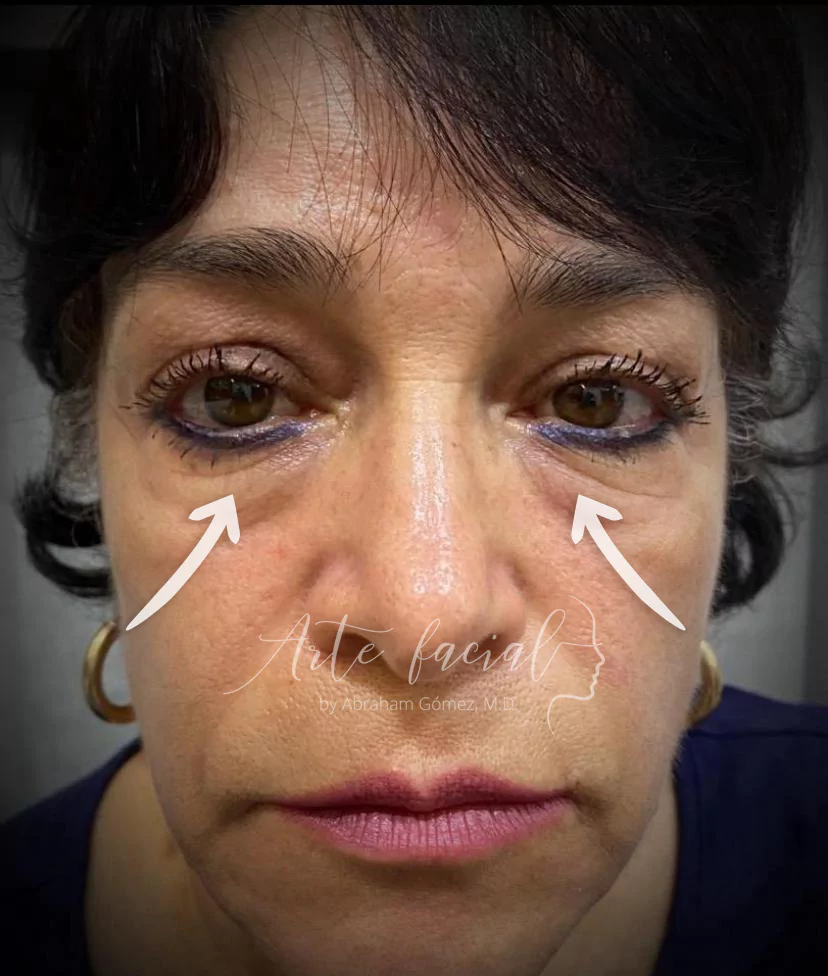
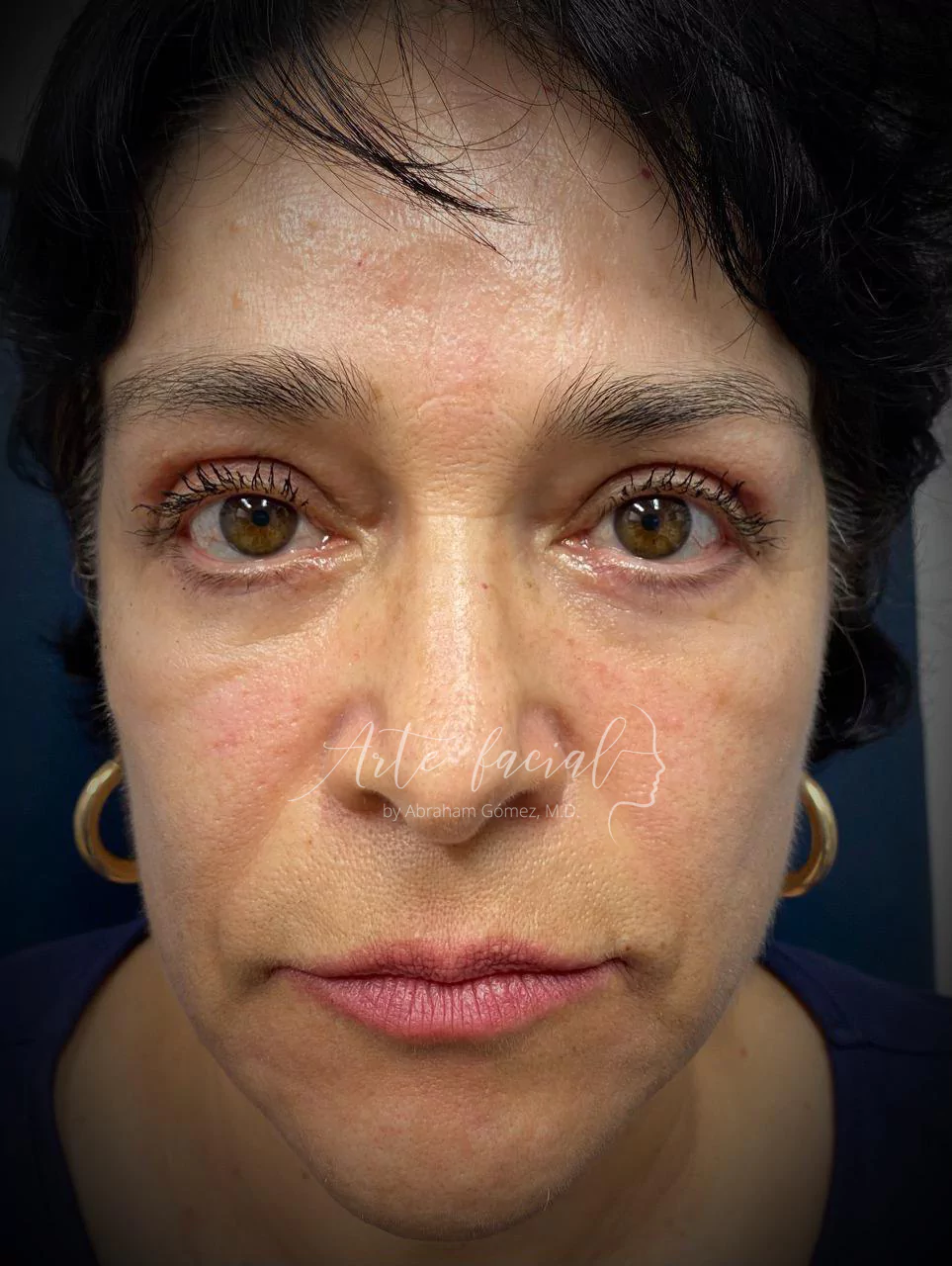
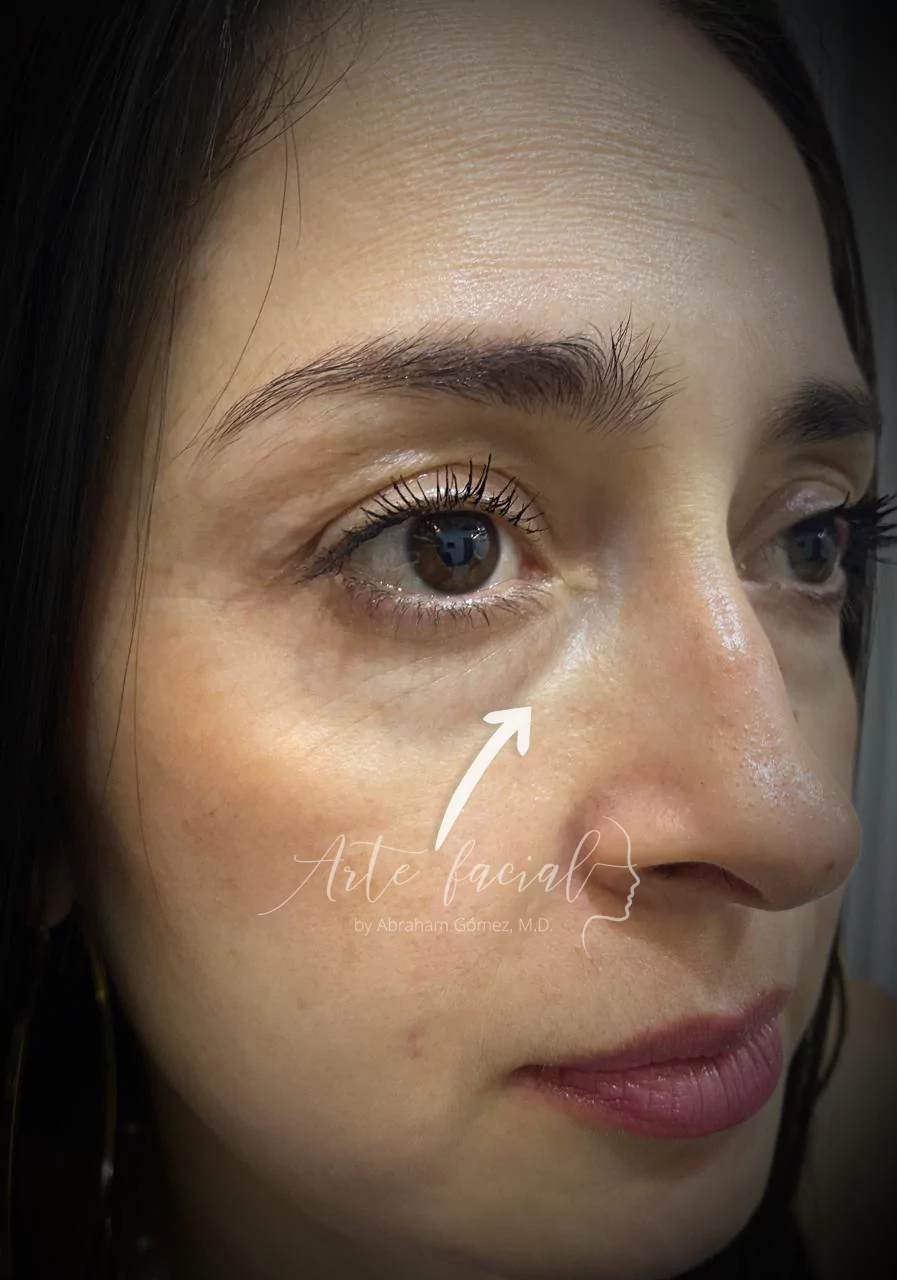
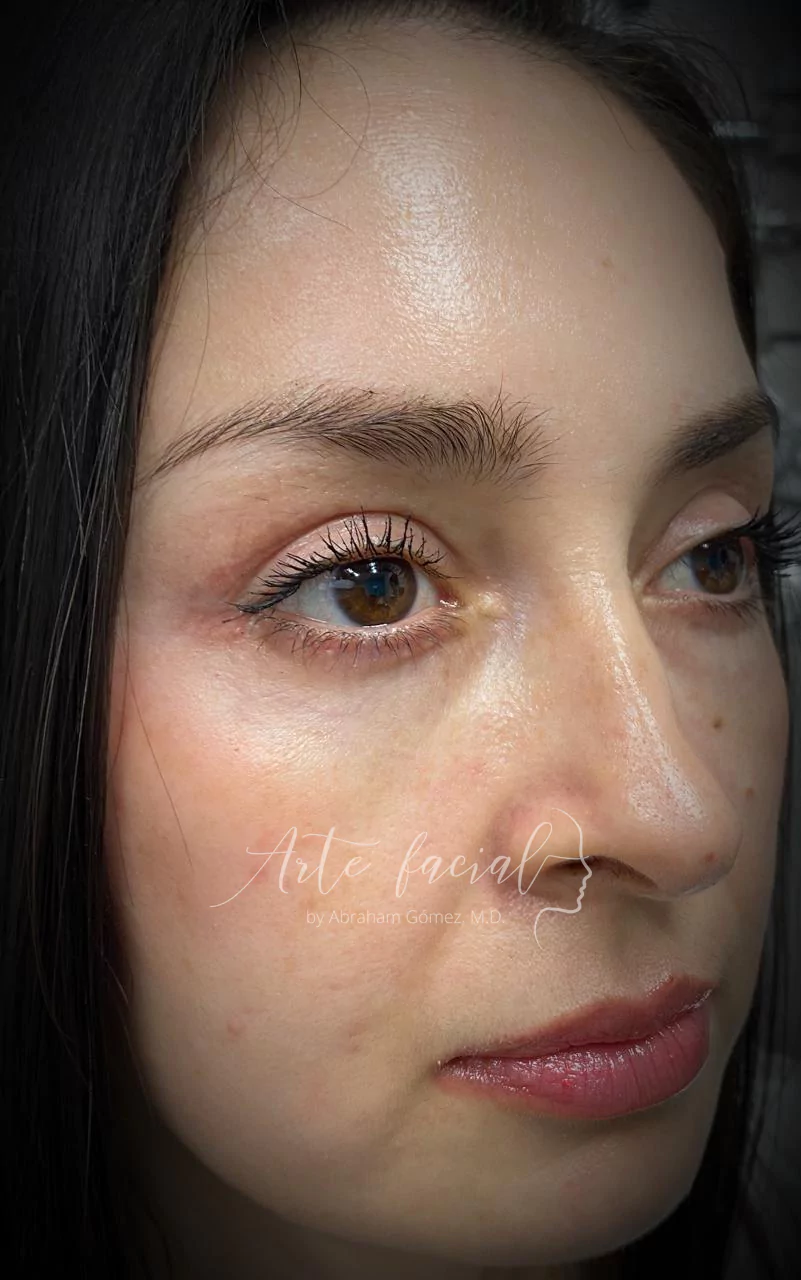
The eyes are the focal point of the face, and consequently, can greatly impact a person’s overall sense of well-being. Although the upper eyelids receive much attention, the first signs of aging are commonly seen in the lower eyelids. Often due to structural and hereditary factors, the lower eyelids can take on a tired or aged appearance, even among younger individuals.
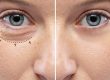
When rejuvenating the eyes, a deep understanding of the anatomical basis for the specific signs of aging is paramount. In the context of lower blepharoplasty, three key issues should be identified and addressed: under-eye bags, wrinkles, and hollows.
Under-eye bags are usually caused by protruding orbital fat that is visible through the eyelid. In a young person, bags may appear due to poor maxillary bone support, while older people notice fat prolapse due to age-related laxity of the eyelid tissues. In most cases, treatment consists of fat repositioning through a transconjunctival approach, although younger patients may benefit from a fat grafting procedure.
The second cause of lower eyelid aging is fine lines and wrinkles. Distinguishing between wrinkles and expression lines, which can be treated successfully with botulinum toxin injections, is important. Chemical peels or skin ablation procedures, such as CO2 laser, can improve mild to moderate wrinkles under the eyes; however, individuals with darker skin tones are not good candidates. Surgical excision is a better alternative for a person with advanced wrinkles and severe tissue laxity. On the other hand, festoons – hammock-like folds of redundant skin and muscle in the cheekbones – represent a real challenge. Treatment consists of extended lower blepharoplasty, canthoplasty, and cheek suspension.
A third issue that may need to be addressed in lower blepharoplasty is hollows, the most common of which is the tear trough deformity. This term refers to a depression or groove between the eyelid and the cheek, creating shadows and dark circles under the eyes. Fat grafting, which blends the eyelid-cheek junction and improves cheek volume, is a great option for correction of the tear trough. Occasionally, fat from the orbit is transposed onto the cheekbone to supply volume to the crease.
These three factors (bags, wrinkles, and dark circles) must be addressed holistically to achieve natural and lasting results. At Arte Facial, we perform a detailed assessment of each case to recommend the most appropriate treatment based on the patient’s anatomy and goals. Feel free to schedule a consultation with our oculoplastic surgeon.

+506 7032-5570
Abraham Gómez, MD
Hospital Clínica Bíblica, Omega Building, 2nd floor
Loras Medical, Torre Las Loras, main floor
+506 7032-5570
Abraham Gómez, MD
Hospital Clínica Bíblica, Omega Building, 2nd floor
Loras Medical, Torre Las Loras, main floor
ARTE FACIAL
ARTE FACIAL

Visit us at our new office! 25% off on your consultation at Loras Medical. Book here (Valid Until December 15, 2023.)
Please fill out the form below to schedule a virtual consultation with Dr. Gomez.


 |
|