


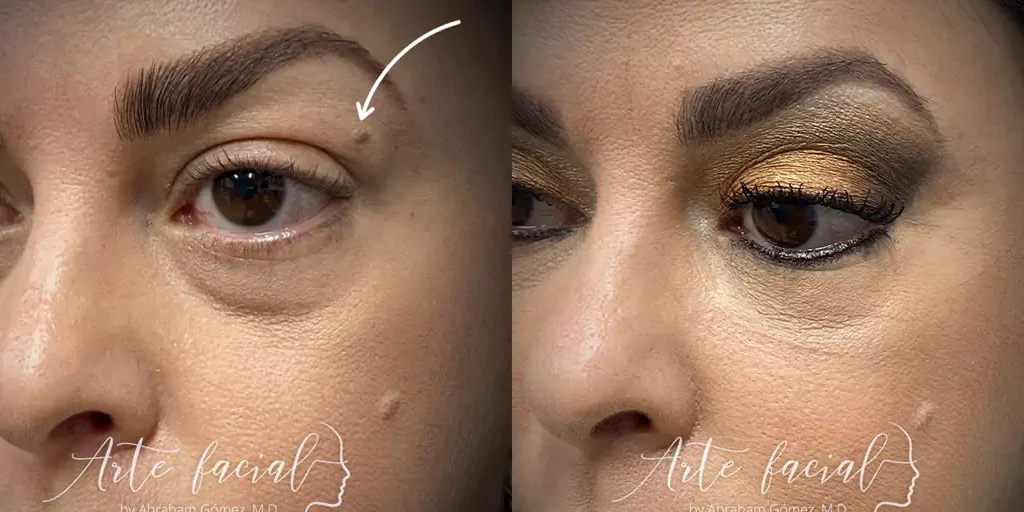
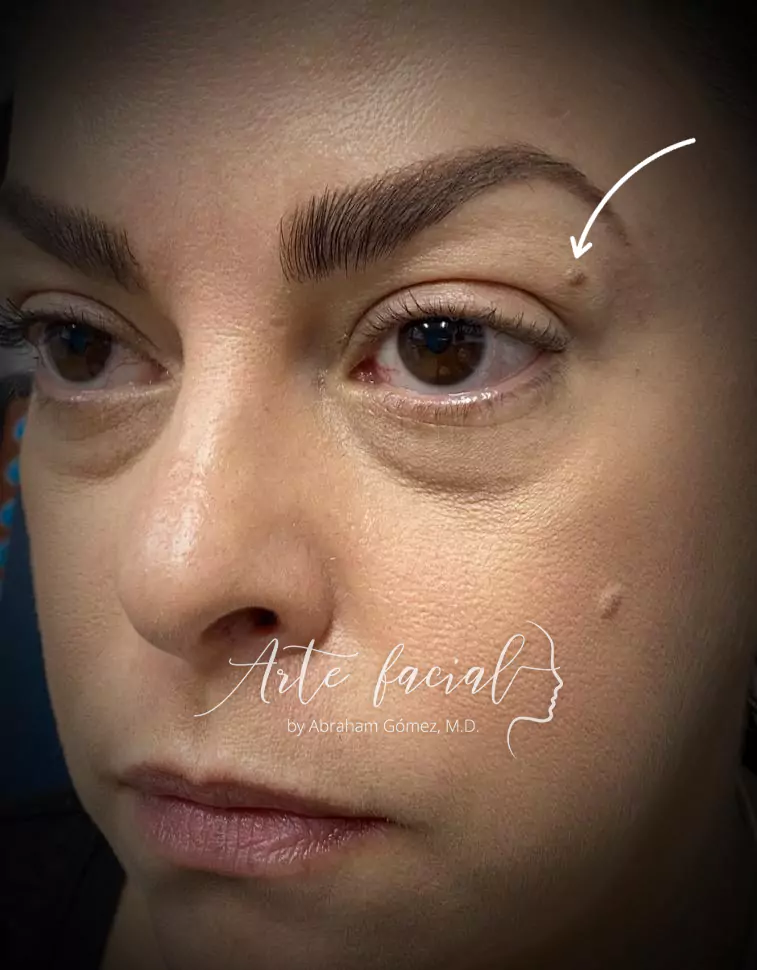
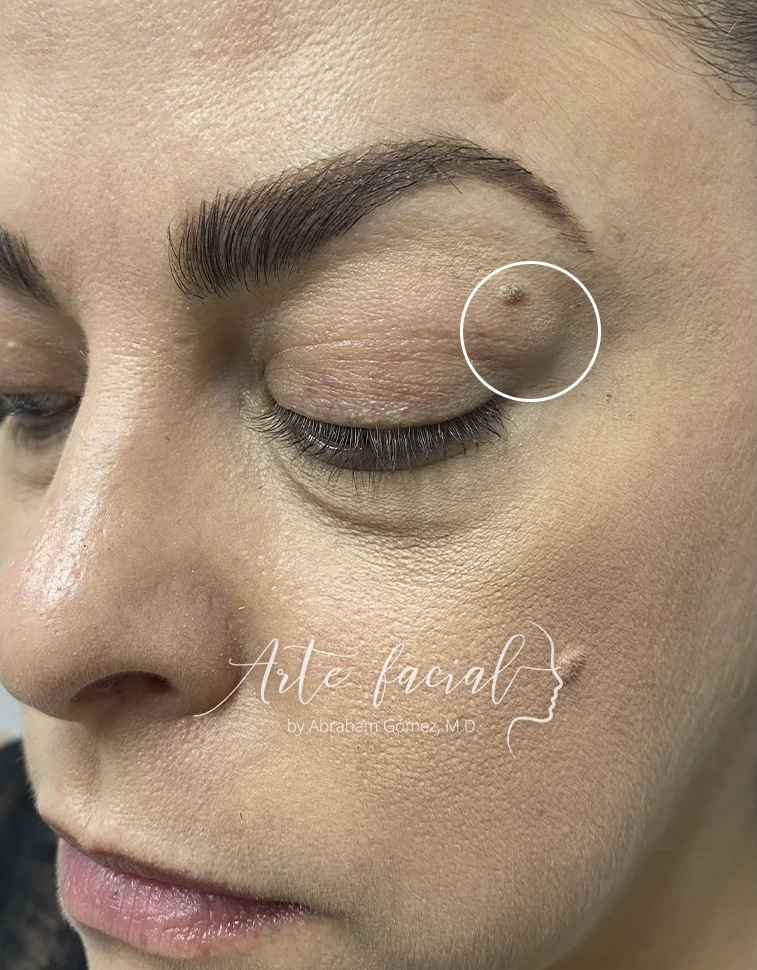
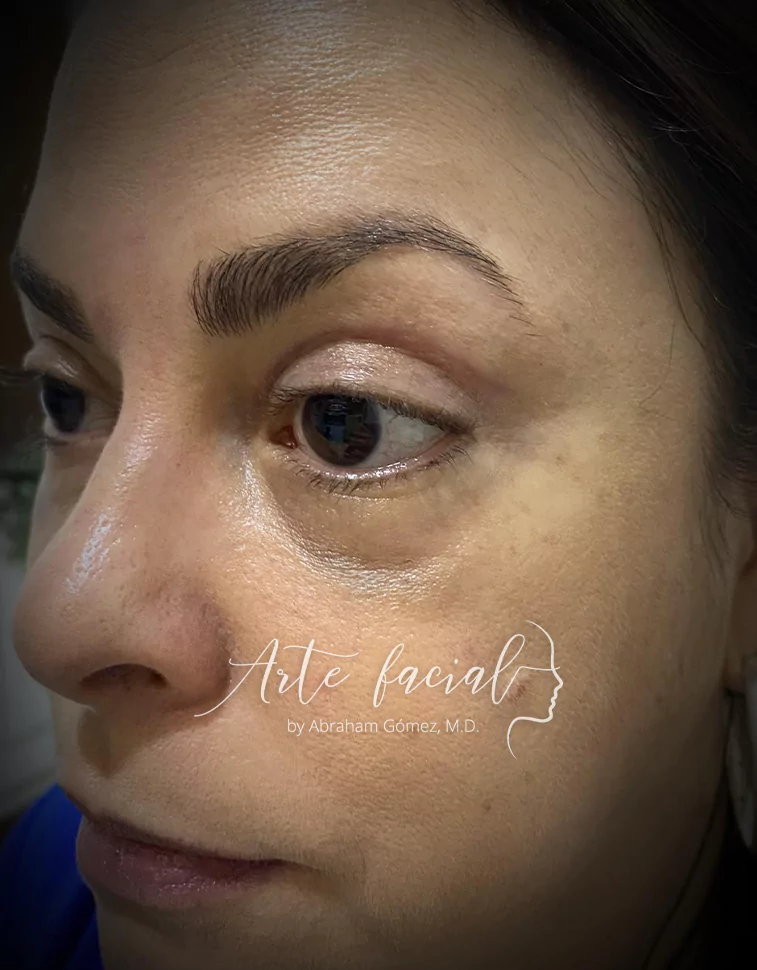
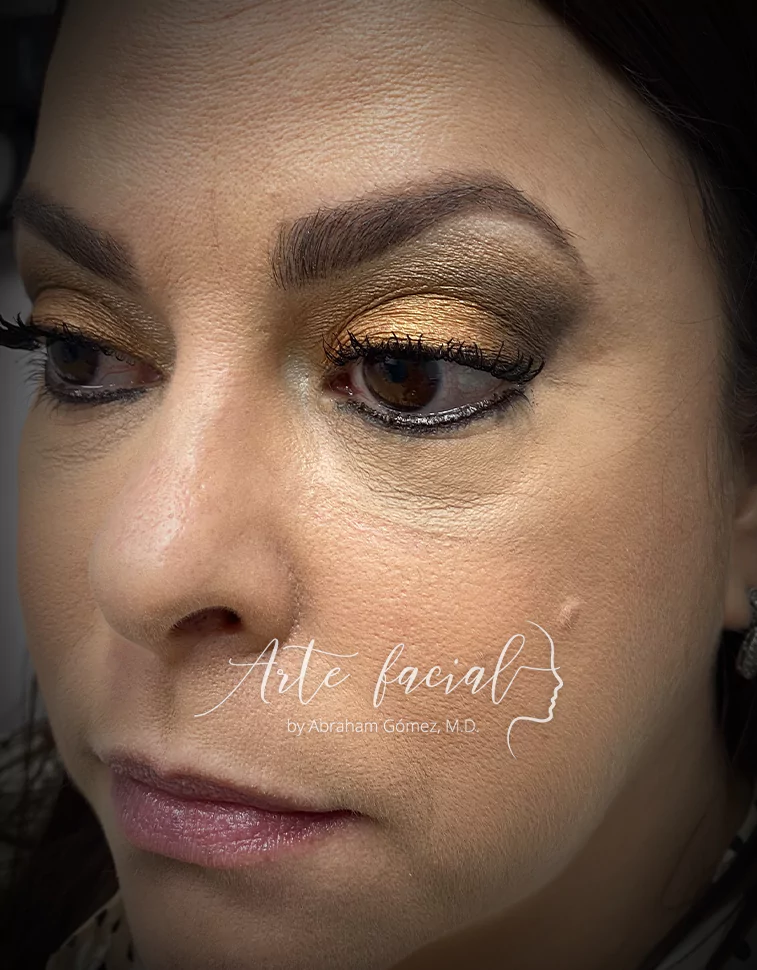
Upper blepharoplasty does more than remove excess skin; instead, it involves the steps taken by the surgeon to sculpt and rearrange the tissues beneath the skin, including fat, muscle, and connective tissue.
Achieving an elegant eyelid crease, restoring volume, and smoothing out lumps and bumps are integral parts of this complex operation. Additionally, prolapse or descent of the lacrimal gland is an underdiagnosed cause of upper eyelid aging. A lump in the external region of the upper eyelid can be seen in these patients if examined with a keen clinical eye.
Managing the prolapsed lacrimal gland during blepharoplasty requires meticulous repositioning to prevent damage, which can cause significant dry eye symptoms. The gland is visualized, dissected free from its attachments to connective tissue, and repositioned in its natural anatomic position. Once this step is completed, the rest of the operation can proceed, taking extreme care to preserve eyelid volume and contour.
Although this may slightly extend the recovery period, it is a necessary step that should not be skipped. Both the patient and the surgeon will greatly appreciate the results of treating lacrimal gland prolapse.

+506 7032-5570
Abraham Gómez, MD
Hospital Clínica Bíblica, Omega Building, 2nd floor
Loras Medical, Torre Las Loras, main floor
+506 7032-5570
Abraham Gómez, MD
Hospital Clínica Bíblica, Omega Building, 2nd floor
Loras Medical, Torre Las Loras, main floor
ARTE FACIAL
ARTE FACIAL

Visit us at our new office! 25% off on your consultation at Loras Medical. Book here (Valid Until December 15, 2023.)
Please fill out the form below to schedule a virtual consultation with Dr. Gomez.

 |
|